
Small firms escape another squeeze – for the moment
17 September 2026
·
Liz Barclay
Share:
Bank holds rates – but three members wanted a rise now
Small firms escape another squeeze – for the moment
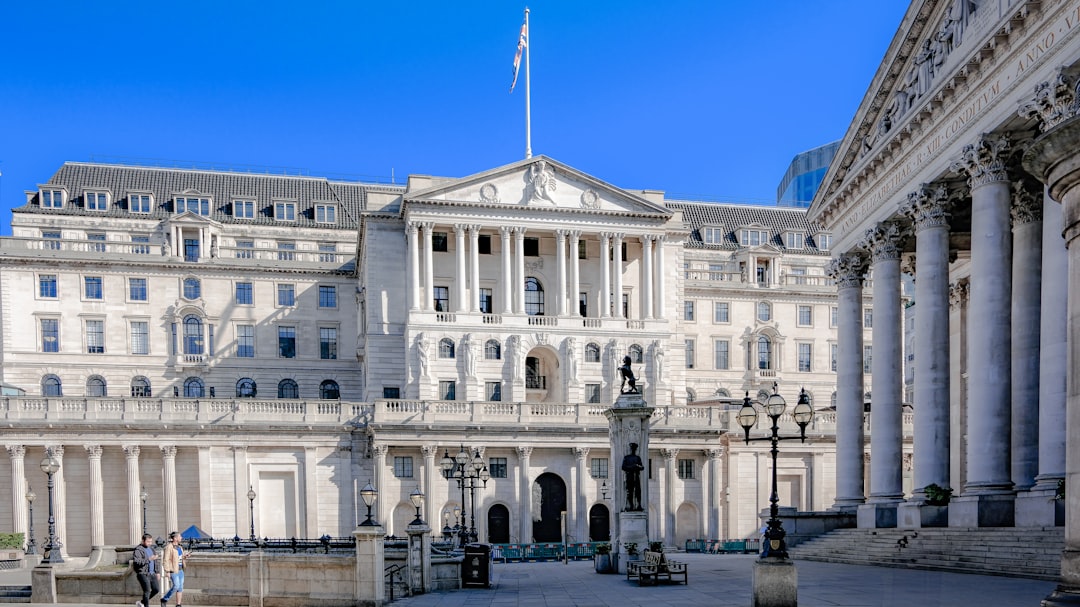
Small businesses escaped another increase in borrowing costs today as the Bank of England held interest rates at 3.75%. But don't celebrate yet. The decision was 6–3, with three members of the Monetary Policy Committee wanting an immediate increase to 4%. Inflation is rising, energy prices remain volatile and the Bank says the risks are increasingly on the upside. For Britain's small businesses, today's message is pretty clear: no extra pain today, but there could be more coming.
 INTEREST RATE DECISION
The Bank of England has held Bank Rate at 3.75%.
For small and micro businesses, that matters.
After months of rising costs, weak demand and tightening cashflow, another increase in the cost of borrowing was the last thing many businesses needed.
But today's decision shouldn't be mistaken for an all-clear.
Three of the nine members of the Monetary Policy Committee voted to increase rates immediately to 4%.
That's a significant warning.
Inflation versus survival
Inflation has risen to 3.1%, driven partly by higher energy and fuel prices, while services inflation remains at 3.4%.
The Bank says inflation is likely to rise further over the coming quarters as the Middle East conflict continues to affect energy prices.
Its problem is deciding how much of that inflation will spread into the domestic economy.
The Bank calls these “second-round effects” – when an initial energy shock starts feeding into wages and prices elsewhere.
So far, it says there's little evidence of that happening materially.
But the longer expensive and volatile energy persists, the greater the risk becomes.
On the other side of the argument, the labour market remains soft and businesses and households are already facing tighter financial conditions.
That's why today's decision was so finely balanced.
Small businesses feel rates everywhere
Interest rates don't just affect mortgages.
Small businesses rely on overdrafts, credit cards, short-term loans, asset finance and other borrowing to manage cashflow and invest.
When rates rise, that money becomes more expensive.
Higher repayments mean less money for wages, stock, rent, energy and investment.
For a microbusiness operating on tiny margins, the difference can be substantial.
Customers get squeezed too
There's another side to higher interest rates.
Customers have mortgages, loans and credit cards.
Increase their repayments and households have less disposable income.
The café, retailer, hairdresser, restaurant and local service business then feels the consequences through weaker spending.
Small businesses can therefore be squeezed twice: their own borrowing costs increase while their customers have less money to spend.
No relief – just no additional pain
Holding rates at 3.75% doesn't suddenly make borrowing cheap.
It simply means the Bank hasn't made it more expensive today.
That distinction matters.
The Bank itself says increases in market interest rates have already passed quickly into borrowing rates faced by businesses and households.
So small firms aren't necessarily experiencing today's decision as relief.
They're experiencing it as the absence of another increase.
THREE VOTES SHOULD WORRY BUSINESS
The most important number today may not be 3.75%.
It could be three.
Megan Greene, Catherine Mann and Huw Pill all wanted rates increased to 4%.
They are worried that higher energy and food prices could become embedded in inflation and believe acting earlier could prevent a more serious problem later.
The six members voting to hold rates also recognise the inflation danger but believe existing tight financial conditions and weakness in the economy justify waiting for more evidence.
That leaves small businesses sitting between two powerful forces.
Inflation says rates may need to rise.
A soft labour market and fragile economy say be careful.
WHAT HAPPENS NEXT?
The next Bank of England interest-rate decision is due on 5 November.
Markets are pricing the possibility of several increases over the coming year.
But Governor Andrew Bailey has cautioned against assuming those rises are inevitable. The Bank hasn't decided on four increases and today's minutes make clear that future decisions depend heavily on what happens to energy prices, inflation and the wider economy.
So watch three things.
Energy prices.
Inflation.
And whether higher costs start feeding through into wages and prices elsewhere.
If that happens, the argument for higher rates strengthens.
If hiring remains weak and domestic inflationary pressure continues to ease, the Bank has more reason to wait.
THE SMALL BUSINESS SQUEEZE
Today's hold gives small businesses something they desperately need: a little stability.
But it doesn't solve the underlying problem.
Small businesses remain caught between high employment costs, energy, insurance, business rates, tax, weak demand and expensive borrowing.
They now need the Budget to reduce that cost stack rather than add to it.
Because small businesses don't just watch interest-rate decisions on the television.
They live with the consequences in their bank accounts.
Today they escaped another increase.
On 5 November, we find out whether they escape again.
Share: