
Save our high streets by giving them a new purpose
12 November 2026
·
Liz Barclay
Share:
Britain’s town centres need a future beyond shopping
You cannot revive a high street by wishing the chain stores back. Town centres need reasons to visit that a delivery van cannot replace, from healthcare and libraries to markets, food and entertainment. Give small businesses an affordable place in that mix and regeneration becomes more than a fresh coat of paint.
High streets can be “saved”, but not by rewinding the clock 20 years.
High streets and town centres around the Uk are looking down at heel. The Prime Minister promised to reboot them when he arrived in Number 10. Is he flogging a dead horse? We can’t go back to the future. We need a new take on high streets and to stop treating them as shopping corridors and start treating them as mixed‑use civic ecosystems.
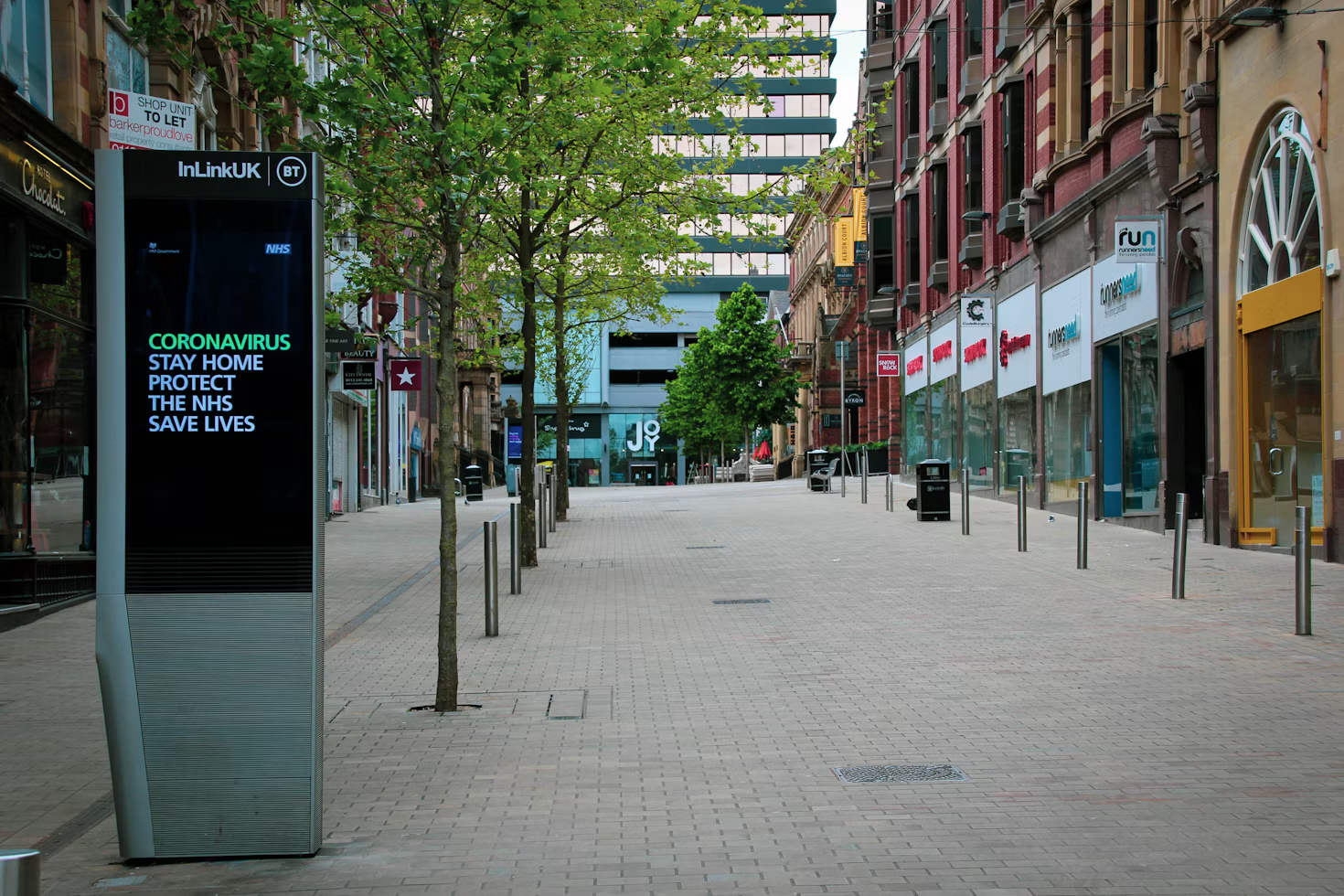
photo-1589200413677-b911f1e634ba - https://unsplash.com/photos/people-walking-on-sidewalk-near-buildings-during-daytime-yRofgQw2c6s
The Reality
Online has taken the routine spend. Books, clothes, electronics, even groceries, have all shifted online. Vape shops, barbers, and bookmakers have moved in to fill cheap units with high‑margin, low‑stock businesses. Even charity shops are closing.
Retail employment has fallen fastest where the model was most fragile. In the East Midlands for example high streets relied heavily on mid‑market chains with little diversification.
Local authority cuts have hollowed out the “reason to go”. When arts, culture, libraries, youth centres, and events are cut, town centres lose their pull. You’re left with transactional spaces instead of places people want to spend time.
Crime isn’t the root cause. It’s a symptom of economic and social neglect. When units are empty, footfall drops, services disappear, and informal guardianship of space weakens, you get more antisocial behaviour and visible disorder. Businesses that are a front for criminal activities appear in the empty units because landlords need the rent.
Solutions
High streets that feel resurgent today share a few traits:
Mixed use, not retail‑only. Housing above shops, co‑working spaces, health hubs, training centres, maker spaces, and civic services all live side by side.
Anchors that are not just shops. Libraries, arts centres, colleges, markets, food halls, and community hubs pull people in regularly.
Smaller, curated retail footprint. Fewer but stronger independents, often clustered: food, craft, repair, specialist services, co-exist with experiential retail (things you can’t do online).
Events and programming. Markets, festivals, late‑night openings, cultural programming, give people a reason to visit beyond pure consumption.
Transport and public realm that feel safe and pleasant. Decent lighting, seating, greenery, clean streets, and reliable public transport make people happy.
Where this happens, you see footfall stabilise or grow, even if traditional retail share continues to shrink.
Policy levers
If we’re serious about “saving” high streets, the levers aren’t mysterious; they’re just politically hard:
Planning reform: Make it easier and faster to convert dead retail into housing, health, education, and community spaces without endless delay.
Business rates and rent reform: Stop punishing premises‑based businesses and make it viable for independents to occupy good units.
Targeted cultural and community funding: Restore some of the cuts to arts, libraries, youth and community spaces specifically tied to town‑centre regeneration.
Local procurement and anchor institutions: Use hospitals, colleges, councils and major employers as anchors, locating services in town centres and buying from local businesses.
Transport and safety investment: Reliable buses/trains, safe walking routes, and visible, community‑oriented policing make town centres feel worth visiting.
The Will
They can be repurposed, not restored to what they were.
If we keep treating high streets as failing shopping centres, we’ll lose them. If we treat them as compact, walkable, mixed‑use civic neighbourhoods, they have a future.
The real question is whether national and local government are willing to:
accept that retail will be a smaller share of the high street,
invest in culture, community and services as core infrastructure, not “nice‑to‑have”, and
redesign tax and planning so small, stubborn, bloody‑minded entrepreneurs can actually afford to be there.
Share: