
AI chaos: 7 in 10 workers want out — but can’t escape
29 April 2026
·
Liz Barclay
Share:
Britain’s workforce is heading for a quiet crisis. New data from WORK:SELF shows most workers are desperate to change careers as AI reshapes jobs, but almost none are managing to do it. For small businesses already struggling to hire and retain staff, this growing gap between ambition and reality could hit productivity, stability and growth hard.
New data from WORK:SELF shows most workers want to change careers, but very few succeed. Small businesses will feel the consequences first.
Artificial intelligence is not coming for jobs. It is already reshaping them. Quietly, quickly and unevenly.
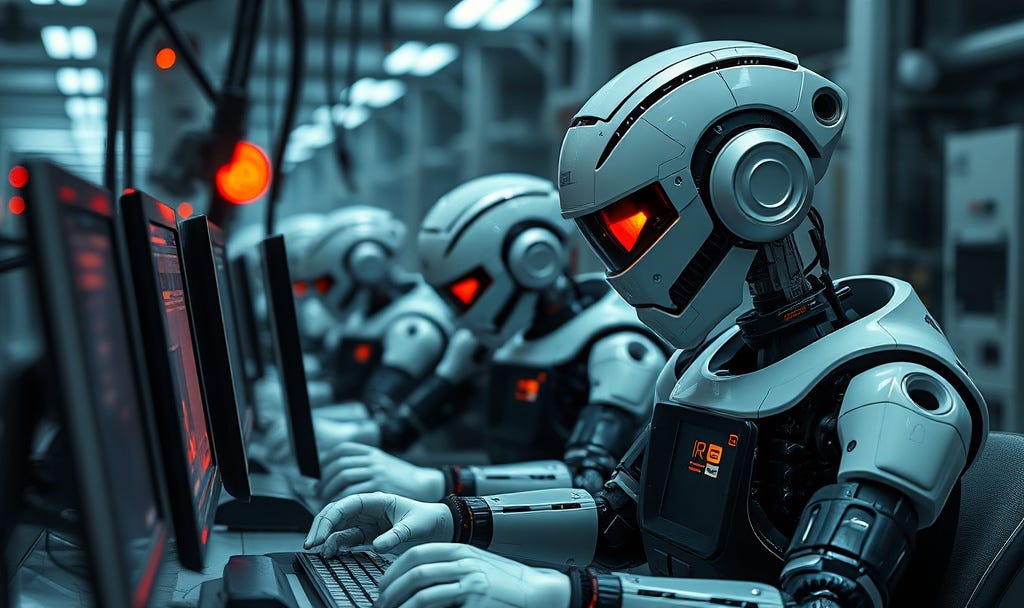
AI loses jobs
New research from WORK:SELF (work-self.com) suggests something deeper is happening beneath the headlines about productivity and automation. It points to a widening gap between what people know they must do and what they are actually able to do.
That gap matters.
The AI Job Disruption Report 2026, produced by WORK:SELF, finds that 72% of professionals expect to change careers within the next 12 months. That is not normal churn. It is a structural shift.
But here is the catch. Only 3.8% manage to complete a structured transition.
This is not a skills shortage in the traditional sense. It is an execution failure.
For small and micro businesses, that distinction is critical. These firms do not have the luxury of large HR teams, formal retraining programmes or long adjustment periods. They depend on people who can adapt quickly and stay productive while doing it.
Yet the report paints a workforce under real strain.
43% report purpose misalignment or creative stagnation.
32% show signs of burnout.
That is not a pipeline of confident, adaptable talent. It is a warning signal.
If you run a small business, you will already recognise some of this. People feel unsettled. Some are distracted. Others are quietly questioning what comes next.
The data suggests they are not imagining it.
Career change is no longer something that happens once or twice in a lifetime. It is becoming continuous. The idea of a stable, predictable job is being replaced by something far more fluid and uncertain.
For policymakers, this creates a structural problem. Much of the system still assumes stability. Tax, employment law, training and support are built around predictable careers and linear progression.
That is no longer how work behaves.
For small businesses, the impact is immediate and practical. Recruitment becomes harder. Retention becomes less certain. Productivity becomes more variable.
But there is also an opportunity.
The WORK:SELF data shows that around 35% of professionals are actively developing skills to work alongside AI, rather than compete with it. These individuals will become increasingly valuable.
They are not necessarily the most technical. They are the ones who:
adapt quickly
think clearly
use tools to improve outcomes
The challenge is that most people are trying to make this shift without structure or support.
That is where the real gap sits. Not in ambition, but in navigation.
For small business owners, the response does not need to be complicated. But it does need to be conscious.
Start with the basics:
Talk to your people about how they see their future
Focus on practical, everyday improvements in how work gets done
Create as much clarity as possible around roles and direction
These are small steps, but they matter more in uncertain conditions.
What this report ultimately shows is that the wider workforce is beginning to experience what small businesses have always known. Work is not stable. It changes, often unpredictably, and usually faster than systems can keep up.
The difference now is scale.
The question is whether the support structures around that workforce will adapt quickly enough.
Because if they do not, the risk is not just individual frustration. It is a labour market that looks active on the surface but is quietly struggling underneath.
And small businesses, as ever, will feel that strain first.
Share: